Stonehenge

Stonehenge
Showing posts with label Russia. Show all posts

Thursday, February 1, 2018

My #MeToo Memories, Part 3

This is the final installment of "My #MeToo Memories." If you would like to read the whole sequence, you can begin here.

In the past three decades, I’ve traveled extensively, often alone, and I’ve had very little trouble or harassment from men. Part of the trick is simply not to seem helpless or vulnerable. Don’t dress provocatively. Don’t wear jewelry—with the possible exception of a wedding band. I often wore a simple wedding ring during my travels, even when I wasn’t married. Don’t go places by yourself at night. Don’t make eye contact with unknown men when you’re out and about. Men in many cultures consider that an invitation. Don’t get bogged down with excessive luggage.[1] Keep most of your money hidden in a pouch under your clothing, and don’t try to access your hidden stash in public.
Most of all, be aware of your surroundings. Avoid dark alleys. Avoid heavy crowds as well as deserted streets. Keep your eyes and ears peeled for anything that suggests danger. And find safety as quickly as possible if you feel threatened.
Although I haven’t had any serious harassment during solo travels—other than a couple of pick-pockets that I wasn’t even aware of until later—I've had a couple of experiences that could have turned out badly. Both happened during a trip to Russia in 1992 while traveling solo.
The first was in the town of Irkutsk, where our Sierra Club Service Trip group went after nearly three weeks of trying to do clean-up on the western shore of Lake Baikal. The previous night, I had stayed at the home of a Russian woman. The following day, I planned to take a train from Irkutsk to Novosibirsk, to meet a colleague, Tatyana Korolenko, who was working at the Siberian Academy of Medical Sciences.
One of the Russians, Sergei, who had translated for the Sierra Club group, was the son of Russian author and environmentalist, Valentin Rasputin. He had invited several of us to tea at his parents’ home. I went to a museum before the tea party and then walked to Sergei’s house from the museum, guided by a map of the town.
At one point, I became aware that someone behind me was pacing me—that is, walking behind me and going neither faster nor slower, usually a sign that the person is deliberately following. I did a quick glance behind me, noticing the person and his outfit, and then stopped at the next corner and crossed the street. I then crossed at the next corner, heading back in the opposite direction. The follower continued his pace behind me. I then crossed again, and once again at the next corner, ultimately heading back in the original direction. The follower apparently realized that I was aware of him tracking me, because he didn’t cross the final time to head in the direction that I (and he) had initially been walking.
The final experience that generated some anxiety during the Russia trip was on a train from Novosibirsk to Moscow. Tatyana, the fellow scientist I visited in Novosibirsk, helped me to buy the train ticket. Tatyana wasn’t savvy enough to ask for two tickets so that I could have the whole compartment. The tickets were not very expensive for Russians. Thus, I had one ticket for a two-person sleeper compartment, which I ended up sharing with another passenger during the three-day train ride from Novosibirsk to Moscow. My compartment mate was a young man in his early to mid-twenties. This felt problematical as I was in my early fifties and didn’t speak the language very well. Nor was I familiar with the customs or culture in this country where everything had become a social and economic free-for-all since the collapse of communism.
Two of my hostesses in Russia had warned me to avoid the Russian “Mafia,” lawless opportunists who were taking advantage of the political turmoil of the early 1990s. These men often referred to themselves as “entrepreneurs.” Ex-party apparatchiks fell naturally into this line of work, as did ambitious young men without jobs, when the former state and its bureaucratic structures crumbled. My compartment-mate was just such an entrepreneur.
I had thought I was going to have the compartment to myself and was surprised when he walked in and tossed his bag on the overhead rack opposite my seat. We nodded to each other when he entered, and we exchanged a few words of acknowledgement in Russian. Russians are naturally suspicious of strangers. And I was wary about sharing a train compartment with an unknown young man for a few days and nights.
Tatyana had been very anxious about the possibility of my sharing a compartment on the Trans-Siberian railroad with “one of our Russian tiefs” (thieves). So I was psychologically prepared for that possibility. When my compartment mate turned out to be a young man who said he was a “broker,” I went into yellow alert. That is, I didn’t leave the compartment without taking my valuables (passport, money, cameras) with me – most of which I wore strapped to my body, anyway. I did not change clothes during the entire trip, wearing the same jeans and sweatshirt for two and a half days and two nights, even while asleep.
In fact, I slept quite well on the train because I had enough covers. I had brought the sleeping bag from the back-packing trip. My money and documents were strapped in a hidden pouch beneath layered clothing, so I didn’t need to worry about that. 
I imagined a worst-case scenario and was prepared for that. I had brought an unopened bottle of vodka from Siberia, and I slept with it beside me, tucked into my sleeping bag. The scenario I imagined was that, if I were disturbed at night by the young man, I could bop him over the head with the bottle hard enough to break it. The alcohol would sting his eyes and nose and the jagged glass could serve as a weapon. Something about the vibes of a determined person may help to keep predators away.
Luckily, I didn’t need to implement my worst-case strategy. The young man was pleasant and kept his distance, and we offered food to one another from time to time. Near the end of the journey, I gave him my inflatable sleeping pad—partly because I didn’t need it anymore. Moreover, it would have been just one more thing to carry. Perhaps I also wanted to win his good will so that he wouldn’t feel like taking anything that really mattered.
He asked me how much the sleeping pad was worth in dollars (it had “made in USA” on the tag, which seemed to please him), and I told him about thirty or thirty-five dollars. He said he was going to keep it for his own use, which meant, perhaps, that he wasn’t going to sell it. It didn’t matter either way; we both came through a potentially difficult experience without harm.
So, this is a litany of sexually or physically threatening interactions I’ve had with males throughout my life, most of which did not end badly, and from which I do not feel any lasting damage. Several of the encounters could have gone otherwise. I know women who have been raped against their will, and it’s foolish to say it was their fault. Perhaps they weren’t as feisty or self-protective as I have been in my life. Perhaps they didn’t have the sorts of forewarnings I received from my mother. Perhaps they were just overwhelmed.
We certainly need to teach our children, and especially our girl children, how to protect themselves from predators. Boys can also be victims of sexual predation, although that is not as frequent, but it is still emotionally damaging. Moreover, boys and men suffer physical abuse in fights and wars and other forms of aggression by bullies, perpetrated on others who show any signs of weakness. Anyone can be a victim of abuse—physical, financial, or cultural. Bullies are everywhere. Abuse is what bullies do.
In the long run, it’s easier to respect yourself if you can protect yourself.


[1] I’ve frequently broken that rule and have been robbed a couple of times because of it.

Friday, May 5, 2017

Latest Literary Efforts

Mea Culpa
Somehow or other I managed to over-write this blog while trying to do another one about the recent eclipse. The basic problem was that I had two Blogger windows open at the same time and wasn't careful enough about which one I was working on. Lesson #1
Moreover, I had not made  a copy of the post after it was written, because I composed it in the blogger box, as I'm doing now. Note to self: Make copies of all blog posts and keep the copies in a folder. I have lots of folders on my computer and can usually find stuff there, but I trust the online platforms to keep copies of whatever I post. When I tried to back-track and find a copy of the original post, it was all gone. Lesson #2.

Reconstructing a Past Post
So I'll try to reconstruct the poor lost post, which was mostly about books that have come out during the past year. Three new books include a travel booklet, a short-story collection, and an autobiography. Here's a brief look at all three.

Travel Booklet: Russia Revisited

Russia Revisited describes a tour to Ukraine and Russia in 2010, which was a bucket-list trip taken to revisit the European portion of that huge and complex country. The narrative is based on observations written in a journal kept during the trip as well as information from other sources on the history of the places we visited. For those looking for a quick historical overview of Russia and its thousand-year past, this would be a useful, easy-to-read, well illustrated booklet.
That tour took place nearly two decades after an initial backpacking trip across the entire country in 1992, shortly after the disintegration of the Soviet Union. That trip began in Irkutsk, Siberia, with a Sierra-Club backpacking group, and continued solo, primarily by train, across the vast expanse of Asian and European Russia to St. Petersburg, Russia's European gateway. I'm still working on a book about that trip, which will include a more comprehensive overview of Russian history.and culture as documented by other western travelers who have visited and written about Russia and the USSR between the eighteenth and twentieth centuries.

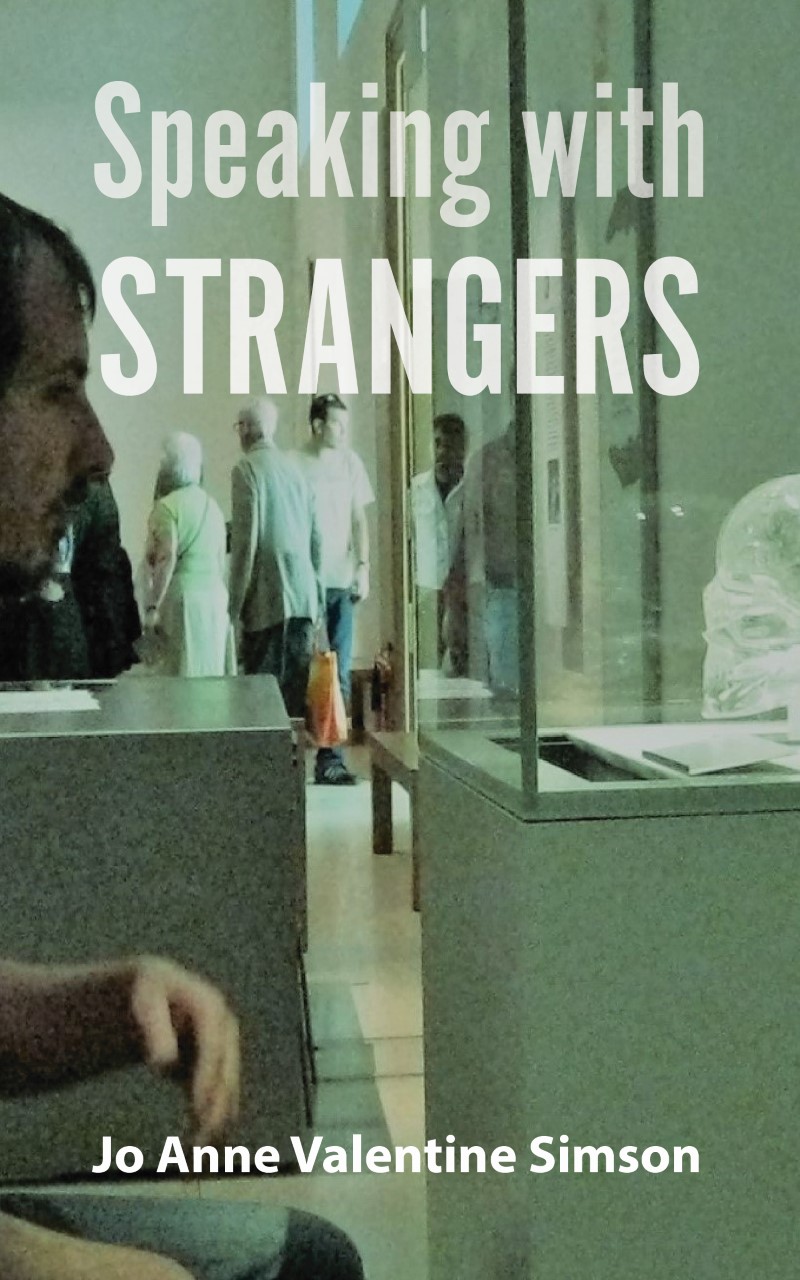
Short Fiction Collection: Speaking with Strangers


This is my first book of fiction, although several stories in the collection had been published previously in literary magazines. Speaking with Strangers is an eclectic collection of fiction that relates the sorts of unsettling experiences that can happen when we interact with those we don't know or don't understand, including ourselves.

"This is a terrific collection of stories. There is something for everybody in these stories. The characters are vibrant and interesting, and when they're speaking you feel part of the conversation. Family dynamics, the pursuit of career, the serendipitous treasures found in chance conversations - it's all here! You will enjoy this book!!" (reader review, Amazon)

Autobiography: Saving My Life

This autobiography is a synopsis of my life, constructed with the help of journals and photo albums. Saving My Life was written primarily for my children, grandchildren, and close friends, although others might discover something interesting in the complex life of a late twentieth-century "liberated woman" -academic, world traveler, and iconoclast.

"Jo Anne Valentine was born to educated but impoverished parents during the Great Depression, attended grade school during World War II, had an idyllic youth in rural Michigan, and attended college and graduate school, eventually earning a Ph.D. degree in the biomedical sciences. She did research and taught at a time when women experienced considerable difficulties pursuing a scientific career. She was married twice and has three children and six grandchildren. Keenly interested in human culture, she was an avid world traveler, ultimately living abroad for five years in four different countries. This autobiography narrates a complex life replete with setbacks and rewards."

Enjoy!


Thursday, January 26, 2017

Russia Revisited


Russia is in our minds a great deal these days, with Trump sidling up to Putin before the election and Putin basically endorsing Trump's presidential candidacy. This can feel both bewildering and frightening. What is it about Russia that has seemed so threatening to Americans for generations?

Russia Revisited asks that question as it delves into a bit of Russian history, spinning a travelogue of a tour to Ukraine and the fabled cities of Moscow and St. Petersburg. Less frequently visited towns along the northern rivers of Russia, with their Scandinavian heritage, add intrigue to the trip narrative. This is intended as the first in a series of travelogues with the general theme, "Come Take a Tour with Me." Full color illustration illuminate observations and commentary about Russia's history and culture.

The Russian Bear was depicted as a menace to America during much of the twentieth century. A moderate thaw occurred during WWII, while the Soviet Union was an ally. The fear intensified again after the war, as Russia developed nuclear weapons and created an "Iron Curtain" to separate Communist Eastern Europe from the "democratic" countries of Western Europe.

A thaw came with the fall of the Berlin Wall and the replacement of Communist apparatchiks with elected officials. Somehow, though, authoritarian rule seems to have reasserted itself. Why are Russians so susceptible to autocratic governance? How will the new Russia and the new America relate?

Find some answers and enjoy the journey!


This booklet is intended as a teaser for a more serious book on Russia and its history, in progress, hopefully to be published later in the year. In that book, I include stories from fabled Western travelers to Russia, such as the Marquis de Custine and John Steinbeck. I also include journal entries from a back-packing trip taken to the "new" Russia in 1992, along with travel commentary from my parents' two trips to the "old" Soviet Union during the 1970s.


Saturday, July 16, 2016

St Isaac's Cathedral and The Hermitage.


6/11/10 (continued)
On Tuesday, we had another bus trip around the city, the highlights of which were a visit to St. Isaac Cathedral and an afternoon at the Hermitage Museum.
Columns and ceiling of St. Isaac's Cathedral


The inside of St Isaac’s Cathedral was amazing—huge, spacious, mosaic-encrusted iconostasis and real marble-veneer columns (as opposed to the faux-marble-painted columns of Peter and Paul Cathedral). The inside glittered with gold leaf on the mosaics and chandeliers and other ornaments. The outside was a dull-gray classical building surrounded by columns and topped with a gold dome. The rather dull exterior belied the sparkling interior.

We had lunch at a restaurant near the Cathedral of the Savior on the Blood, built on the site of the assassination of Alexander II, the czar who freed the serfs and was later assassinated by an anarchist. I left lunch early and went to the cathedral, where I took photos both outside and inside.
Interior of the Cathedral of the Savior on the Blood


The last time I was in St Petersburg, the apartment I stayed in was near that church, but it was under repair/reconstruction, and I wasn’t able to go inside. The inside of the sanctuary was marvelous—narrow but tall, with a main aisle and two side aisles. The walls are covered with paintings and mosaics, and the interior has a feeling of lightness and simple sanctity.

That afternoon, we went to the Hermitage Museum and spent two hours with a guide going through galleries and rooms of the palace lined by paintings ranging from medieval sacred art to Dutch interiors. Some of the more famous paintings were a couple by Leonardo da Vinci as well as some Titians and Rubens and Rembrandts. Not liking crowds, I tended to hang around the edges and look at pictures that others were not crowded around. We were allowed to take photos without flash, and I took photos of several of my favorites.
Huge vase of malachite in the Hermitage


Another thing I noticed, particularly this time, which I hadn’t before, except in the malachite room, was the stonework throughout. Many rooms had large, sometimes huge, vases of stone—jasper, onyx, basalt, granite. There were large columns of gray granite in one room. Another room had a bird-cage clock (behind glass) made of gilded paper-mache from the time of Catherine the Great.


Tuesday, July 5, 2016

Saint Petersburg


Fountains at Peterhof, with the canal to the Baltic Sea

[6/7/10 – 6/11/10 In St. Petersburg, as in Moscow, we slept on the boat and visited the city by bus. It was truly convenient to live in one place and not have to pack and carry luggage from hotel to hotel. St. Petersburg is the most glorious of all Russian cities—it was the dream of Peter the Great to create a magnificent Russian city facing Europe. And he did. The new Russian government has repaired and renovated those iconic structures built during the reigns of Peter, Elisabeth, and Catherine II. On this visit, the cupolas were gold plated, everything was shiny, and the fountains at Peterhof (meaning Peter’s Palace) spewed water exuberantly. Some of that water ran down into the Baltic Sea.]

Monday, June 7, journal entry. “On the evening of our first day in St. Petersburg, the ship is docked along the wharf on the Neva River, and I am sitting at a little corner table on deck 2 watching the river, a harp bridge spanning it and a cluster of high-rise apartment buildings beyond the bridge, some with odd, wavy profiles. It is nearly 11:00 pm and the sun has not yet set.”

That first day in St. Petersburg was a full day, with a city tour of St. Petersburg, stopping for a photo-ops along the way. One was the Smolny Cathedral and Convent complex—the Russians call it an “ensemble”—followed by the square across the river from the Admiralty and the Hermitage.

Peter and Paul Cathedral

Afterwards, we walked through part of the Peter and Paul Fortress, including most particularly, the amazing Peter and Paul Cathedral. Classical in external appearance but incredibly baroque inside, it houses the tombs of Romanov tsars in the side aisles.


Tomb of Elizabeth, daughter of Peter I


That afternoon, more than half of our group visited Peterhof, the palace complex begun by Peter the Great and completed by his daughter, Elisabeth. This was constructed on the Baltic shore, facing Europe, which was Peter’s symbolic strategy for turning away from the Asiatic backwardness of traditional Russian custom and thought, and turning toward the European Enlightenment. He was resisted mightily by both nobility and church, but the effect of his building efforts, including transferring the Russian capital to St. Petersburg, paid off in terms of commerce with Europe and control of the future direction of Russian culture.

Peter was a ship-builder, and he wanted to engage in trade with the rest of the world by sea. So he constructed his capital on the Baltic outlet of the Neva River, the bit of ocean he could find under Russian control that was nearest to Moscow, Russia’s traditional capital (after Kiev). During and following Peter’s forty-year reign at the turn of the eighteenth century--and until the Russian Revolution of the early twentieth century--Russian culture both absorbed from and contributed to the culture of Europe.

The palace grounds at Peterhof were enormous, with gazebos and waterworks along the walkways and hidden in small groves of trees. The fountains were spouting vigorously; the statues and figurines were freshly gilded and shone brilliantly in sunlight; the gardens and the wooded areas were a luscious green; and the sky was deep blue and dotted with clouds.

We didn’t go inside the palace, but we did go through the “cottage” at Catherine’s Block, as opulent as any ordinary palace. Eventually, that building became the royal family home for Nicholas I’s family of the later Romanov Dynasty. Elisabeth, the daughter of Peter, built most of the main palace at Peterhof. Peter, of simpler tastes, only constructed one long, flat building on the Baltic shore known as Monplaisir.

Terraced fountains at Peterhof, palace in the background
Peter also designed the fountains, which work by gravity flow, with its water source a few miles away, collected in a holding pond at the top level and from there, flowing into the fountains. The fountains stop at around 5:00 pm, and water in the holding pond becomes replenished at night. The entire water-works complex is drained at the end of September. A canal leads from the grand cascade of fountains out into the Baltic sea.

The fountains and the canal to the sea create a splendid panorama from the upper terrace across the lower gardens.


Wednesday, June 15, 2016

Kizhi Island and Petrozavodsk

6/5/10
Kizhi Island is an island museum of wooden structures built largely during the early eighteenth century. Because of long periods of freezing cold during northern Russian winters, the wood is less prone to rot by mold and destruction by burrowing insects. So many of these buildings are still standing and still structurally sound. I saw examples of the same phenomenon in the wooden churches (Stavekirke) of the Norwegian countryside on a trip I took with my mother in 1976.
Ancient wooden church complex on Kizhi Island under repair
 On Kizhi Island, the population is very small, and the whole southern part of the island has been turned into a folk museum whose focal point is an extraordinary complex of churches and a bell tower built entirely of wood. The “summer church” (Church of the Transfiguration, 1714), with 22 wooden domes, or cupolas, is particularly striking from the outside, although we couldn’t go inside because it is under repair and renovation. 

The church complex on Kizhi Island, viewed form the farmhouse
We did go into the “winter church” (Church of the Intercession, 1764), which contained many icons, and we were allowed to take photos inside. A bell tower stood at one point of a triangle with the other two churches. The complex of the three buildings offered endless combinations of views and photographic variety, each more interesting or pleasing than the last, particularly with the constantly changing background of clouds—cirrus and cumulus—against an intensely blue sky.
Icons inside the Church of the Intercession


Extraordinary wooden cupolas of the Church of Transfiguration
As a part of the outdoor museum complex, there was a large, old farmhouse, transported to the site from elsewhere, and appointed as a typical pre-communist peasant farmhouse, with a windmill and several other buildings like granaries and animal sheds. Apparently, many farm animals were kept in the house, especially during winter.


Farm house museum, Kizhi Island


When we awoke this morning, we were docked at Petrozavodsk, on the western shore of Lake Onega. Both Kizhi and Petrozavodsk are located in the Republic of Karelia, the northernmost republic in European Russia. Many Karelians are Finns in origin and speak a Finno-Ugric language.
The city of Petrozavodsk was originally a foundry city, making heavy metal instruments of war (cannon, etc.) as well as rails and other heavy railway equipment. 
Cannon and cog wheel from old foundry in Petrozavodsk
The city was largely destroyed during “The Great Patriotic War” (WWII) and was rebuilt afterwards in the Soviet style. According to our guide, Natasha, the city has hardly changed since the collapse of the USSR. So it’s still a model of the life and architecture of Soviet times, except that now more food is available in the little local market.
Alexander Nevsky Cathedral, Petrozavodsk


We visited a beautiful church, Alexander Nevsky Cathedral, where a baptism was being held. So I couldn't photograph the inside, which was exquisite. The color of the inside walls was the most beautiful light green-blue that I think I’ve ever seen. Someone called it “mint green,” but it was a richer color than that. It was absolutely luscious, peaceful, awesome/awe-inspiring. And the dome above was a contrasting dark blue. The icons were modest and there was not too much glitter in the church. I lit a candle for the girls, and I didn’t really want to leave the sanctuary when it was time to go.

Kvas for sale in the market

We visited other sites in the city, including a market, where we were able to purchase a few items. Another major site in the city is a central square where an eternal flame continues to burn for the defenders of Petrozavodsk during WWII. There, we saw a wedding party get out of a limousine, and the bride and groom put flowers beside the flame. She had on a pretty flimsy dress and must have been very cold! 

Wedding bouquets at the flame of eternal remembrance


A statue of Lenin towered over the main city square, cap in hand, leaning toward the future.
Lenin in the main square of Petrozavodsk


We're now sailing back southward on Lake Onega from Petrozavodsk toward the Svir River. The lake is a dark gray-blue, and clouds hanging over the north and east are ominous. Yet off to the west, the sky seems ordinary—calm, almost nonchalant. Today, in Petrozavodsk, the weather was fierce and cold—the cold of an unforgiving north countrywindy, intermittent rain. Our guide (since Kiev) is Natasha, whose home town is Petrozavodsk, and she served as our town guide today. Petrozavodsk is such a contrast to Kizhi Island, in the middle of Lake Onega, which we visited yesterday.
A rainbow beams between clouds and lake outside the window near where I’m sitting and writing. I took some photos with both cameras but don’t know how they’ll come out.
Rainbow over Lake Onega


This afternoon, we had an optional trip into town to see and hear a group called “Kantele” that played traditional Karelian instruments and sang and danced. They were a great pleasure to watch and listen to—lively music and energetic dancing. Also, three women played an instrument that looks like an autoharp, also called a kantele, that had a sweet, ringing sound—rather like a harp, but more crisp and high-pitched. One of the singers was tall, and her face reminded me of my mother when she was young.

Wednesday, May 25, 2016

Uglich, Goritsi, and Kirillo Belozersky Monastery

6/4/10

On deck, the sun is shining, the boat is churning smoothly across Lake Onega, the wind is a little brisk, the cirrus clouds divide the sky into deep blue above and a beautiful turquoise nearer the horizon. This cruse part of the trip has been utterly delightful.
The first place we stopped along the river system was Uglich, a small town with a couple of ancient churches (and a nunnery?) dating back to the time of Ivan IV, otherwise known as “The Terrible” (grozni, in Russian). Apparently the young son of Ivan, Dmitri, was murdered in Uglich by emissaries of Boris Godonov. Dmitri and his mother had been sent to a convent there. This left the Rurich dynasty without an heir; Ivan IV had already murdered his elder son in a fit of rage. A church (“St. Dmitri on the Blood”) was built on the site of Dmitri's murder, and we were allowed to go in and take photos—with payment of a fee.
Church of St. Dmitri on the Blood


 I also went into a second church, the Cathedral of the Transfiguration,  paid the fee, and took photos of the frescoes and of the iconostasis. The iconostasis in this church was particularly impressive.
Iconostasis in the Cathedral of  the Transfiguration


Cathedral of the Transfiguration


On the way back from the church, in the old fortress area (Kremlin), I stopped in a shop and bought two watches: one (less expensive) with lapis lazuli stones, the other decorated with malachite. I also bought an unusual amber necklace and a scarf, so I went on a bit of a spending spree in that town.
This town was definitely a tourist trap; the entire walkway from the dock to the fortress is lined by little tent shops of the sort one might have seen in medieval European towns when the traveling merchants came to sell their wares. In European towns and villages, there was usually a market day on the square once a week or once a month, and merchants brought their wares into town on carts, plying the circuit as was convenient. Obviously, most of the river tour boats stop at Uglich, famous for its watches and cheeses, and also for good prices on other types of Russian souvenirs.
Palace of Prince Dmitri. Note the elaborate woodwork,
still intact from the sixteenth century

The same was not true at Goritsy, our stop on the following day (yesterday). They are apparently best known for their furs, but it was a warm day, and not many of our group were buying. Also, a great many of the group are from California and Texas and other states in the southwest, so the furs weren’t tempting to them either.
Kirillo-Belozersky Monastery, mostly abandoned

I had signed up for a side trip to the Kirillo-Bellozersk Monastery. It was an old, dilapidated fortress-monastery, but apparently some nine or ten monks are now living in buildings near the church. Other areas are occupied by local villagers who were allowed to move in during the Communist era, and they’re still there by squatters’ rights. They have kitchen gardens on the monastery grounds and apparently live there rent-free.

Two elderly ladies (babushkas), monastery squatters


This has been an absolutely wonderful trip so far, and it is only half over. This afternoon we will stop at Kishi Island.

Saturday, February 4, 2012

Last Trip Abroad


My trips seem to become odysseys: long, convoluted, crisscrossed voyages—partly planned and partly spontaneous—in which I hope to experience and learn as much as possible wherever I happen to be. I love to explore history, interact with people, gaze enthralled at the surrounding landscape, and generally enjoy the ambience of a place with its unique sights, sounds, and smells. All this is easier to do when traveling alone.
Part of learning and growing, for me, is to write about what I experience, and to photograph whatever grabs my attention. Reviewing words and photos then brings things into focus and consolidates memories. For most folks, a trip is a vacation, a time to relax and stop having to pay attention. For me, a journey is most often an adventure—a time to be alert and to stay tuned in, because the great Unknown—that for which I’m always searching—is fascinating, needs to be attended to, and could get out of control.
Usually there’s an initial impulse or a theme for a trip. While I was still a working scientist, a scientific convention was often the trip’s focal point, and then I might plan a stopover at some city along the way to see a relative or old friend, or I might stay an extra day or two in the convention city to visit museums and other local sites.  Since retirement, though, I've gone to more exotic spots and done fluky things I'd just read about in magazines or heard about on the radio.
My trip abroad, in the summer of 2010, was some of all-of-the-above, a crazy quilt of places I had never yet been during three years of living in Europe, at three different times in my life, or of places I had been previously and wanted to see once again on a “Last Big Trip.” I had never before visited the British Museum, although, with a recent interest in archeology, I have come to realize that many of civilizations finest artifacts are sequestered there. I wanted to see Russia again, after having spent a couple of months in that sprawling country during the summer of 1992, shortly after the collapse of the USSR. And I wanted to explore the south of France, the Midi, because I had slighted that part of my favorite European country (yes, I’ll confess, I’m a Francophile) during the three years I lived on the continent.  I also wanted to see my daughter and her family who, at the time, were living in Berlin.
So, how could I fold all of those bucket-list items into one trans-Atlantic trip before I stopped flying altogether (as I intended after the trip)? First, I made a reservation for a river-cruise tour of western Russia that included Moscow, St. Petersburg, and quaint villages in between. There were trip extensions to Ukraine, Estonia and Finland, which countries I had never visited, so I signed up for those, too. Then I coordinated with my daughter to find the best days for visiting them in Berlin. While doing this planning, I heard on PBS radio (Pipedreams) about an organ tour in the south of France that might fit my itinerary. It seemed like a fascinating and artistically satisfying way to visit Le Midi. I also coordinated, loosely, with a couple of European friends. Then I constructed a tentative itinerary, with scheduled commercial tours “set in stone,” and the times between them more open and flexible. Altogether, the trip lasted a little over two months, but I believe I saw and did almost everything I had hoped, before that last trans-Atlantic flight back to the U.S.
I used to love to fly, but during the past decade or so, that fondness has turned to abhorrence. I intend henceforth never to take a plane anywhere unless someone pays for my first-class ticket (or at least business class). But for this time, since there was no other way, practically, to get to Europe than by plane, I bought the cheapest round-trip flight I could find to London, and a five-country Eurail Pass for getting around Europe once there.
The next several blog entries—mostly derived from trip journals—will chronicle my “Last Trip Abroad” in the summer of 2010